Yulia Lipnitskaya

I’ve been talking a lot about gymnastics in the past posts so for this one I am choosing to change it up. Figure skating is arguably one of the prettiest sports for people to watch. It’s well watched especially during the Olympics. During the 2014 Olympics, 15-year-old Yulia Lipnitskaya was the best for Russia and in the world. She ended up winning the 2014 Olympics with her Russian team.

Lipnitskaya was not in the recent winter Olympics and she was personally one of my favorites to watch so I decided to look up why she wasn’t in it. I read that she had retired and put herself in a hospital for anorexia.

For this post I’m going to bring up how society views athletes because the article I found below from CBS says that she was in “constant stress when trying to live up to her fans’ expectations”. I bring up societies view again because people don’t understand the pressure athletes have from society.

https://www.cbc.ca/sports/olympics/figureskating/olympic-champ-yulia-lipnitskaya-retires-age-19-1.4265306

Lipnitskaya struggled after the Olympics with not only her weight but also winning competitions for figure skating. This is where societies views come in because they expected her to win and that’s what started to affect her weight. This relates to Shawn Johnson in a way because she felt stress from society on how well she competed and how her body looked.

I found this other article that mentions her eating disorder and how she wishes that she would’ve spoken sooner about the disorder. She says how it just carried on and she couldn’t fix it and it soon continued for three years and she didn’t know what to do.

http://www.espn.com/olympics/figureskating/story/_/id/20682728/olympic-figure-skating-gold-medalist-yulia-lipnitskaya-opens-battle-anorexia

Lipnitskaya is a great example of an athlete that struggled with an eating disorder and the consequences that they have on an athlete. She ended up retiring after her treatment and said it was because the ice didn’t attract her anymore.

The last thing I would like to bring up for this post is that figure skaters weight matters. This isn’t to say that it’s okay for them to have eating disorders but to say that the slightest weight gain or growth in height can affect how they execute their skating. Lipnitskaya happen to hit her highest point in her skating before puberty. Part of her problem with anorexia was because she then hit puberty and grew and gained a little weight and her skating was now different.

https://www.theodysseyonline.com/to-the-coach-that-killed-my-passion

Above is another article stating that she was also body shamed and people criticized how she looked and how her body also looked. The article says that people would make comments about how she looked to be gaining weight.

Being on this big of a stage and so successful at such a young age makes sense as to why she felt like she had to look a certain way for people. She wasn’t performing to their standards nor was she the 15-year-old that won the Olympics. Instead she was older and still trying to figure out her body, but people didn’t give her that time. They chose to criticize her in to an eating disorder.

Below is a picture of Yulia Lipnitskaya in the 2014 Winter Olympics.

yulia2

Eating Disorders and Abuse

The last time I wrote, I talked about how coaches can affect an athlete’s diet. This isn’t the case all the time because a large majority of the time they are helping their athlete’s. However, there are some occasions they don’t and make things worse for the athletes.

For this blog, I am going to talk about how this is abuse on the coach’s part. According to the dictionary, abuse can be defined as treating a person or animal with cruelty or violence, especially regularly or repeatedly. I brought up the definition because it’s something that is helpful to know when we talk about a subject this serious.

Now a lot of people question how this is abuse towards an athlete. If a coach is continuously telling their athlete they need to lose weight or that they are too fat or even that they don’t look right, they are harming a person. They are treating a person with cruelty. Not to bring up if the athlete does lose too much weight, they can get hurt from being deprived of food which again is harming them.

I am going to bring up John Geddert again in this post because he relates to a lot of what we’re talking about. I discussed how he weighed his athlete’s in front of each other and now I’m going to continue off of that and talk about how that’s abuse.

First, Geddert made their weighing a game for himself. When I talk to my teammate about when she was weighed, she said that they were rewarded for losing weight. To me personally, that doesn’t seem right to be rewarded for losing weight as an athlete that’s supposed to be weighing and eating certain amounts. She also told me that if they gained weight they were punished and made fun of the rest of the week until they lost the weight they gained and more. Again, I bring up the definition of abuse because being made fun of by a coach about your weight is considered abuse. Being told you have to lose weight and more when an athlete is already working out over 24 hours in a week, isn’t healthy and is abuse.

Second, a lot of the girls who attend this gym are known for getting hurt and having injuries. I talked about how my teammate was in a full leg cast due to an injury from gymnastics and she said that she was called fat and that this injury is making her gain weight. She was also told how much she’s going to struggle to get back into the sport and probably wouldn’t be as good due to the weight gain. This is also abuse because again, he is treating someone with cruelty. He is being rude and continuously to these girls.

I use Geddert only as one example of many. McKayla Maroney, Olympic gold medalist in 2012, talks about how she didn’t eat in front of coaches at The Ranch Training Center. She mentions in the article below that “your coaches are just always watching you and wanting to keep you skinny”. She also mentions how she “would’ve starved at the Olympics” if the doctor at the time didn’t bring her food.

https://olympics.nbcsports.com/2018/04/19/mckayla-maroney-savannah-guthrie-larry-nassar-interview/

The very last point on this subject I’d like to make is that Jordyn Wieber is also in the article above and she was a gymnast of Gedderts. She says in the article that “they pressured us to stay thin”. Pressuring people is a sign of dominance and when you establish that then you prove that you can overpower the people below you. Pressuring athletes not to eat is abuse.

How can coaches affect an athlete’s diet?

Hello everyone and welcome back! For this post, I’ve decided to talk about how society isn’t the only thing that influences athletes to have eating disorders. A lot of the time it’s the coaches that they have at the current time.

I am an athlete and I can speak for my sport through both word of mouth and experience, that coaches have the largest impact on our diets. I trained with a girl that my old coach would constantly call overweight. It got to the point where she didn’t feel comfortable in a leotard to train or even compete. Other gyms have coaches that weigh all of their athletes in front of each other.

Now what I’m saying isn’t that they are the only reason why athletes have eating disorders. A lot of the time they’re helping the athlete get through a disorder. They usually have a positive impact on the athlete. However, there are some occasions where they don’t have a positive impact.

I found this article about an old elite gymnast, Kamerin Moore, that went to Twistars Gymnastics. It’s one of the most successful gyms in the nation and has sent several athletes to the Olympics and all of their athletes have continued on to college. The article is below.

https://deadspin.com/former-elite-gymnast-kamerin-moore-learns-to-take-back-1827319050

In the article she goes on to talk about how Geddert continually weighed her and her teammates. He would punish them if they were overweight and reward them if they had lost weight. She also mentions how she was uncomfortable with her body for many years after that.

I have a teammate her has attended Twistars and she confirmed that he did have weighing days. She said it was usually on Saturday morning practices when all of the girls would go to the back room and get weighed. She also told me that even while she was in a full leg cast, she was told she needed to lose weight.

This blog post is not meant to insult the sport of gymnastics at all but instead is to show that coaches do have influences in athlete’s weight. This happens in many different sports such as wrestling for example. Wrestling is a common sport where athletes are required to lose or gain weight in short periods of time.

That’s all I have to share for this post. Join in again to talk about how this act from coaches can turn in to something bigger like abuse towards the athlete.

How are Eating Disorders and Mental Illness Related?

Hi everyone and welcome back! Last time we discussed how Olympic gymnast Shawn Johnson was affected by an eating disorder. To refresh your memory, after she starred in Dancing with the Stars, blogs and articles were written about her body and how it wasn’t right and that she should be skinnier. The articles had a toll on Shawn and she starts to fall into a state of depression thinking she wasn’t good enough for people. So, for this blog post I decided to write about how eating disorders can lead to serious mental illnesses.

Like discussed earlier, Shawn fell in to a depression after tabloids or different articles told the world that her body wasn’t good enough. Another example was Victoria Garrick from the second blog I wrote. She was on the USC women’s volleyball team and she mentions how her mental state got so bad that she would be okay with a car hitting her and her being in a hospital for a while.

Things like these aren’t safe for not only athletes but everyone to be thinking. No one should ever feel like they’re body isn’t good enough and think it so much that they would be okay with getting hit with a car just to get out of practicing or eating.

https://www.healio.com/psychiatry/journals/psycann/1989-9-19-9/%7B35e5c197-56f6-4a2a-b659-20c3e0f7ce44%7D/eating-disorders-and-depression

Above is an article that I found on Google Scholar. It talks about how eating disorders can be an “extreme verson of masked depression”. This meaning that eating disorders are a way for people to show their depression.

A lot of the time we see a connection between eating disorders and depression. I looked up the definition of depression and the website below says that it is a serious medical illness that negatively affects how you feel, the way you think, and how you act.

https://www.psychiatry.org/patients-families/depression/what-is-depression

It then goes on to explain some symptoms of depression. One of the symptoms is changes in appetite meaning the two can be related. It’s clear to see that they can be connected and that they have a past of intersecting in multiple different situations.

In my personal opinion, I don’t think that athletes are looking at the bigger picture when it comes to eating disorders and that’s not their fault. They can’t help but look at how they need to please the people around them and if that means not eating to look the way people want them to look then so be it. However, the bigger picture of eating disorders is that it can ruin them. I listed to women who had eating disorders and later noticed that they were in a state of depression and probably didn’t even notice.

For my next blog post, I will go into how society isn’t the only thing influencing athletes to have eating disorders. Sometimes it’s the people around them such as family members, friends, or even their coaches. So, check in next time to hear how they are influenced by others to make their decisions. Thanks for checking in!

Shawn Johnson

Hi everyone and welcome back!

For this blog post I have decided to talk about a specific person that has been affected by eating disorders and society. What I mean by society is what we talked about in my last post, how society continuously judges an athlete by what they look like and have an image of what their body should be looking like.

The athlete I choose for this post is Olympic gold and silver medalist Shawn Johnson. For those who don’t know this athlete she is a gymnast that competed in the 2008 Olympics in Beijing. Shawn was predicted to win the Olympics but then her teammate Nastia Liukin beat her in the all-around competition. Below I have a video from Shawn talking about the Olympics and what happened to her after.

https://www.youtube.com/watch?v=BEmtRuJwb7A

Like I said before, this is a video of Shawn talking about the Olympics. After she was constantly told that she was not good enough and that the person handing her the medal even said sorry because she won silver. She goes on to say how she went on dancing with the stars and was constantly surrounded by models and that she was this short but muscular gymnast. After she explains all this she talks about how blogs and articles would criticize her weight. At one point she says, “it drove me to try and change everything about myself”.

This is what I mean by the last blog post I wrote. Athletes are put in to a bubble of how they should look like, but no one sees that the bubble society created has the capability to ruin the athlete.

“Feeling like the world doesn’t accept you for who you are… it breaks your heart” this is from Shawn in her video about how she felt when society told her she wasn’t good enough and that she didn’t look like a proper athlete.

Shawn fell in to a depression while trying to train for the 2016 Olympics. She goes over how she felt like she couldn’t train properly because she was so deprived of food. I explained in my second post about the different eating disorders and that it’s so dangerous for them to be doing this. Shawn is a perfect example of that happening because she wasn’t getting the proper amount of food she needed to be healthy enough to train.

Elite gymnast train about 30 to 40 hours a week. If they aren’t eating properly then they could be in serious danger, but this goes for all athletes. To work out the number of hours that they do requires taking care of their body and eating appropriately.

I felt that Shawn was a great example to able to talk about how society affect the way she looked at her body. Athletes shouldn’t feel like their bodies aren’t good enough because they’re the ones working out more than anyone else but like I said last week society makes them believe they need to look thinner or more muscular.

Thanks for reading this post! Our next discussion will be talking about how eating disorders have the power to make a person depressed and how they aren’t in a good mental state. See you next time!

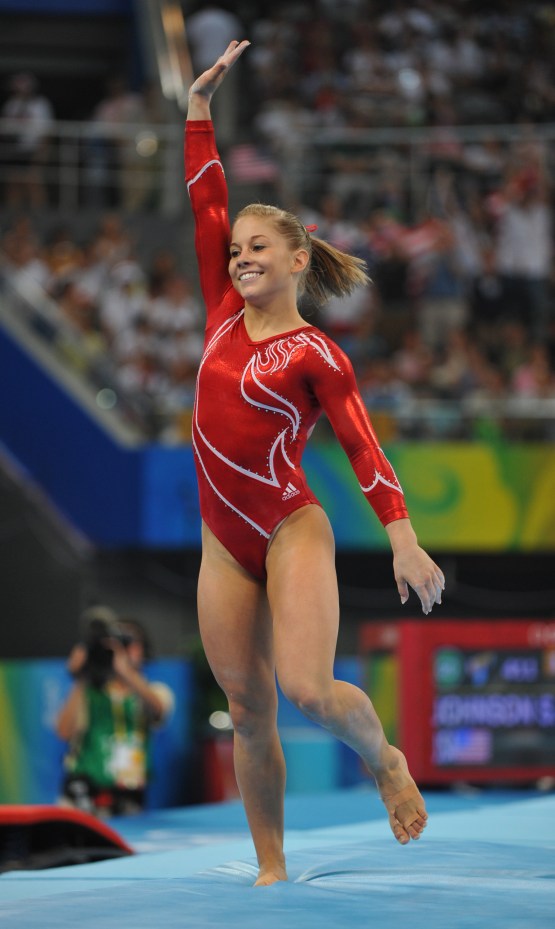
Below is a picture of Shawn Johnson in the 2008 Olympics.

SPORTS_OLY-GYMNASTICS_29_MI.jpg

Why Do They Feel this Way?

Hi and welcome back!

This time on my blog, we will talk about why athletes feel like they need to eat the way they do or why they feel like they need to have a certain body type. Below is an interesting video from YouTube that helps explain a little bit of the how athletes feel, particularly females.

https://www.youtube.com/watch?v=Qqdbzqpc3QM

This video is interesting because first off it brings in a sport that not many people would believe the athletes playing this sport would have an eating disorder. It shows that no matter what, athletes in general are affected by eating disorders or their own body image.

Next, I’d like to mention how she says that “female athletes feel the need to look a certain way from society and from their teammates”. It’s very intriguing because it’s a true fact. Female athletes don’t want to be big they want to be small and not look muscular. I’m an athlete myself and I used to have people comment about how broad my shoulders were and I would hate it. It made me feel like I shouldn’t be like that and should be more petite.

Athletes have a certain image they feel they need to look like and that’s because society makes them believe that. Society’s image of a male athlete is tall, defined, more muscle mass, and thin. For females, people believe that they should be confident and stand tall or seem put together and they should be skinny but muscular. This is what society believes that athletes should look like but what they don’t understand is that not every athlete can look like the “perfect” athlete and still perform to their best.

The reality of an athlete’s body image is that athletes come in all different sizes. When you look at football players, they all are different sizes like the quarterback is usually thinner than a lineman. This goes for females also like in gymnastics, you’ll see some taller and thinner gymnast whereas there can also be short and more muscular gymnast.

Societies image of an athlete is what makes it hard to look like an actual athlete.

Athletes fill these looks into their heads and they start thinking that they need to look this specific way in order to be accepted by society. This isn’t what an athlete looks like; they aren’t thin all the time and not all male athletes are tall and defined.

The last thing I would like to bring up about this topic is that eating disorders lead to different mental illnesses. In the video above, the volleyball player talked about how she got very depressed and had to take time off from games and practice to get better.

I found this article that helps explain a little bit more of what I was trying to say.

https://www.leaguenetwork.com/athletes-body-image/

The article above does bring in how coaches are a big influence but that’ll be a discussion for another time. The next time we meet well start getting into the sports and certain athletes that have come out about their disorders.

Below is a picture found off of Google.

Image result for athletes and eating disorders

The Different Types of Eating Disorders

Hi and welcome back to my blog Eating Disorders within our Sports. For this post I’ve decided to give you all some information that might help you understand the situation a little better.

To start us off I’m going to name a few of the eating disorders that affect athletes today. I found this article that the NCAA posted about eating disorders. The top three that they said affect athletes are Anorexia Nervosa, Bulimia Nervosa, and Binge-eating Disorder. These will be the eating disorders that are commonly talked about on this blog.

http://www.ncaa.org/sport-science-institute/mind-body-and-sport-eating-disorders

Anorexia Nervosa will be the first one we talk about. Anorexia is a very common eating disorder among young female athletes. This disorder is similar to a phobia because people with it are afraid to gain weight.

The next one we’ll talk about is Bulimia Nervosa which involves eating but after one will either throw it up in secret or exercise until they are at the weight they prefer.

The last eating disorder that is often related to sports is Binge-Eating Disorder. This disorder is when people continuously eats food. This is the opposite of the other two because it’s people who can’t stop eating.

Okay, now that you know the disorders, why is this a major issue in sports?

What people and the athletes affected by these disorders don’t know is that this could kill them. What it’ll do is cause failure within their organs and they’ll stop working. Athletes train a crazy amount; elite gymnast must be home-schooled because of the insane amount that they train. If they are training this intensely but eating very little, then how can they be performing at their very best? To answer that question, they can’t. There’s no way that an athlete will perform to their potential if they are ruining their bodies.

I have added an article that I found on YouTube that includes a little bit more about eating disorders and why they’re so common. In the video, it goes over “lean sports” and that a majority of them are involved with eating disorders.

https://www.youtube.com/watch?v=3B7Low4jfsY

So, now that you know more about the disorders that affect athletes, the next question is why do athletes do this to themselves? Well my friends that’s a question for our next blog post. Come back next time and I’ll have more answers for you.

The Journey Begins

Hello everyone and welcome to my blog. My name is Cinny Lamberti and for this blog I’m going to discuss eating disorders within sports. I am a gymnast myself and I know that in my sport alone, there are a lot of cases where gymnasts are forced to eat a certain way or be in a certain weight range and I feel as if that’s not healthy for the athlete themselves. This topic is an interesting one for people who aren’t athletes or aren’t athletes that go through this. It’ll give an inside look about how an athlete feels when they have a coach or fans tell them that they’re too fat and shouldn’t be in the sport.

Don’t worry, there will be way more sports involved than just gymnastics in this blog! Sports such as figure skating, dance, gymnastics, and, of course the one that everyone knows forces people to control their weight, wrestling will all be talked about in this. Like I mentioned earlier, people don’t realize that athletes are in fact affected by eating disorders quite frequently and a lot of the time it’s our coaches that are telling us that we need to lose the weight or calling us fat.

It’s important to talk about because it’s a serious topic that doesn’t get attention and the more attention we give it the bigger the chance of fixing the problem.

Thanks for joining me!

Good company in a journey makes the way seem shorter. — Izaak Walton

post